
Click here to register to watch the film
Click here to view the film trailer.
Screening will start at 12:00 Noon US EDT; 19:00 Palestine; 17:00 UK.; 18:00 Europe. Duration: 126 Minutes; Arabic with English subtitle; 2018. The film screening will be followed by a discussion with the filmmaker Stefano Savona, as well two other directors: Mats Grorud (The Tower) and Ahmad Saleh.
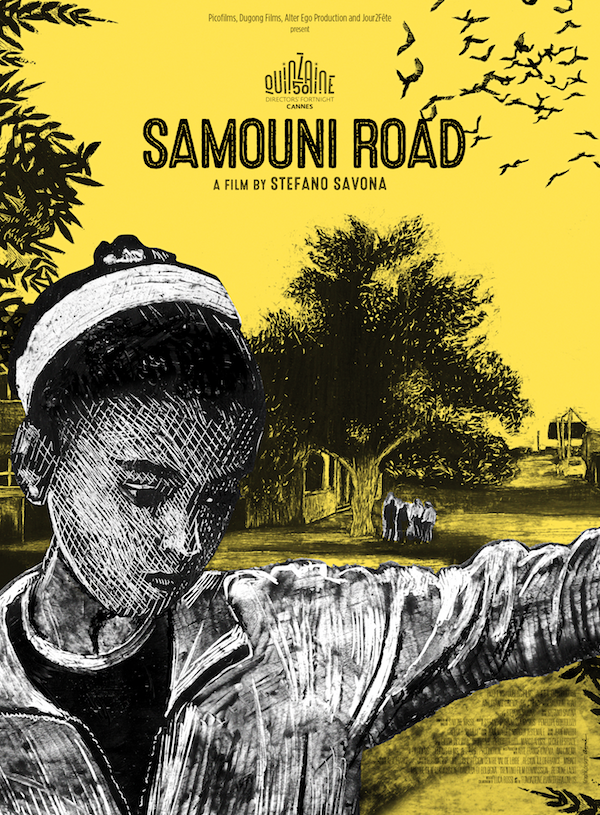
About the Film
The film is set in the rural outskirts of Zeitoun, a neighborhood just south of Gaza City, where the extended Samouni family has lived for generations as independent farmers, proud of their olive groves, orchards, and self-reliance. The narrative unfolds around a looming milestone: a family wedding. This is the first major celebration since the devastating winter of 2009, during which a multi-day military siege of their property resulted in the deaths of twenty-nine family members, the destruction of their homes, and the uprooting of their ancient trees. The upcoming wedding acts as an emotional anchor, prompting a collective, painful, yet necessary dive into the past.
The story is primarily guided by the children and young adults who survived the tragedy, such as Amal, a young girl found alive under the rubble days after the bombing, carrying a physical scar on her head and deep psychological wounds. She tries to remember her father and the peaceful days before the house fell. Beside her is Fouad, a young man who focuses on the material reality of survival, replanting the fields, trying to coax life back into the devastated soil, and dealing with the complex internal politics of how the family is perceived by various political factions in Gaza. As the family clears the debris to build a dance floor for the wedding, the film reconstructs their history. It travels back to show the idyllic life the old men and children shared, the slow buildup of tensions, the terrifying days of the military operation spent huddled together in a single house, and finally, the slow, agonizing process of grief and physical reconstruction.
Director Stefano Savona avoids standard documentary conventions like talking-head interviews or voiceover narration. Instead, the film alternates between three distinct cinematic textures, each representing a different layer of time and memory to ground the audience in the landscape navigated by the young survivors.
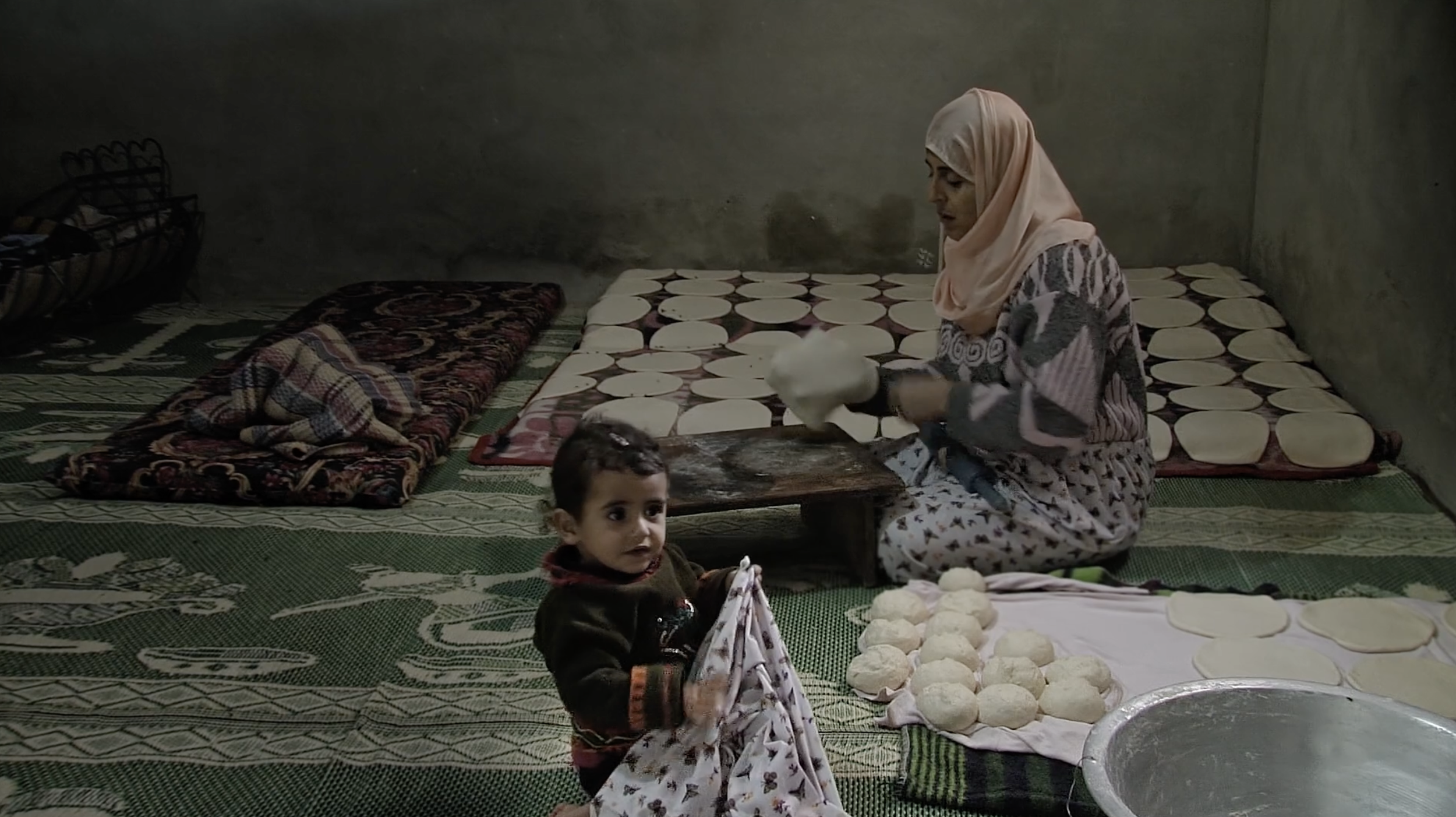
The live-action footage capturing the present is shot in a direct, cinéma vérité style. The camera follows the family as they go about their days—baking bread in makeshift clay ovens, arguing over compensation, clearing twisted rebar, and tending to fragile new saplings. The tone here is tender, grounded, and deeply human, capturing the rhythm of rural life and the family's refusal to be defined solely by their trauma.
Because Savona was not present during the attack, and because no photographs exist of the family's lost history, the film conveys the past through monochrome, charcoal-like scratchboard animation created by Simone Massi. These fluid, textured, and dreamlike animated segments function to visualize Amal’s fragile memories of her father, the shade of the lost olive trees, and the terrifying, chaotic moments of the shelling inside the crowded room. Rather than feeling like a stark, cold reconstruction, the impact of this animation carries the emotional weight of a memory or a nightmare, honoring the subjective truth of the children's recollections.
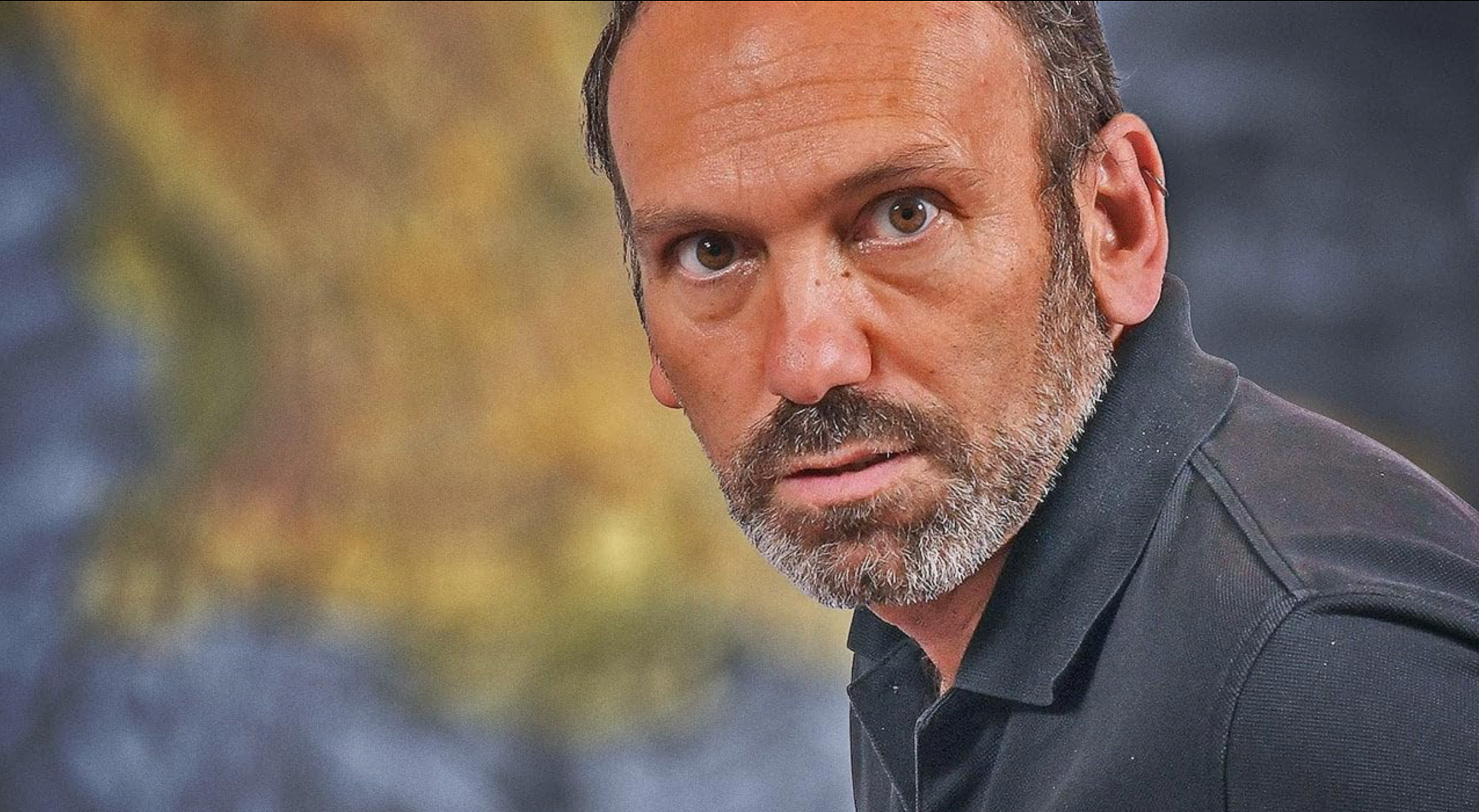
Stefano Savona
The final layer, representing the siege, utilizes stark, black-and-white three-dimensional computer simulations that recreate the tactical perspective of the military forces. Utilizing public military reports, satellite data, and radio transcripts, this technique functions to reconstruct a top-down, grid-lined view of the Samouni property as seen through thermal cameras and drone feeds. This creates a jarring, chilling contrast impact. While the live-action and animation show the family as complex, warm human beings, the digital wireframes show how they were reduced to anonymous, glowing white dots on a targeting screen, underlining the tragic disconnect between reality and military intelligence. Through this seamless structural loop, Samouni Road builds a monument to a single family's history, showing that while a physical landscape can be flattened, the shared memories woven into a community cannot be easily erased.
About the Director
Born in Palermo, Sicily, in 1969, Stefano Savona took an unconventional path to film direction. He initially studied archaeology and anthropology in Rome and the United Kingdom, traveling extensively across the Near East to participate in various archaeological excavations. This foundational background deeply influenced his approach to visual media, instilling a lifelong focus on historical memory, oral testimonies, and the lives of communities navigating shifting realities.
Savona began working as a photographer and independent producer before transitioning fully into documentary filmmaking and video installation art in the late 1990s. Over the next two decades, he established himself as a prominent non-fiction filmmaker, frequently embedding himself in complex sociopolitical landscapes across the Mediterranean and the Middle East. His early notable works include Notes from a Kurdish Rebel (2006) and Palazzo delle Aquile (2011), the latter winning the Grand Prix at the Cinéma du Réel Festival. He also directed Tahrir: Liberation Square (2011), an immersive feature-length chronicle of the Egyptian revolution filmed on the ground in Cairo, which earned widespread European acclaim, including Italy's David di Donatello award.